
Clear packaging, clearer future
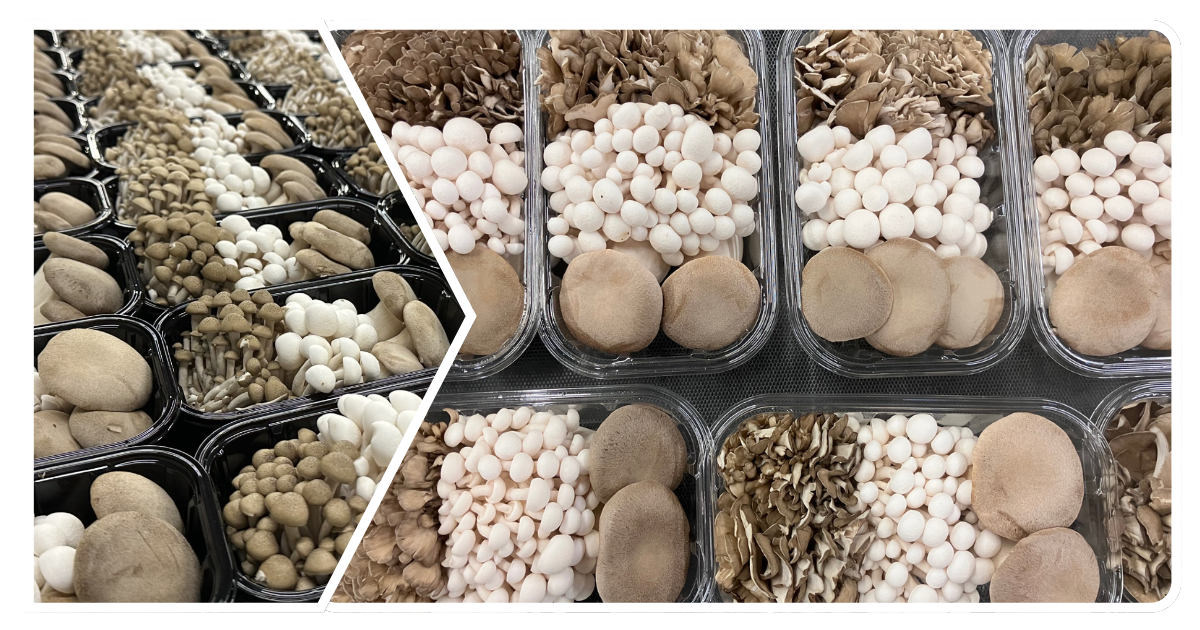
We’re switching from black to clear plastic packaging to improve recyclability.
Notice something different? Our black plastic containers have been replaced by clear plastic — a small optimization to increase recyclability.
Our black plastic trays were technically recyclable — that badge is stamped right there on the package — but the reality of most municipal waste facilities is that many have machinery that cannot detect and divert dark colored plastics. We have begun phasing out all our black plastic for clear or white plastic to improve their real-world recyclability.
Smart Questions
Why do you use plastic?
Our mission is to feed more people more mushrooms — to have sustainably grown, nutritious foods take up a greater “share of stomach,” as we say. So our first sustainability priority is to get our mushrooms to your plate. Ultimately, we want to ditch plastic — but not if it comes at the cost of contributing to food waste, the single biggest source of US greenhouse gas-emitting landfilled and combusted waste.
Why not use cardboard?
In the wild, forest mushrooms are primary decomposers, digesting wood and other fibrous materials. At our farm, our mushrooms — “no longer wild, but far from tame” — have proved fierce adversaries to fiber-based tills. Our Alba Clamshell and Brown Clamshell varieties are particularly aggressive and begin growing into untreated fiber packaging. This reduces shelf life and product quality, violating our #1 sustainability priority.
What’s the path to weaning off plastic?
Today, our plastic tills are made from ~70% reclaimed plastic. About 30% of the tills are made with virgin plastic, which adds rigidity. We're working to reduce our reliance on virgin plastic by increasing post-consumer recycled (PCR) plastic where feasible, reducing overall material use through using lighter weights and design efficiency, staying informed on emerging materials and manufacturing methods, and participating in partnerships to test these novel materials on their path to commercial viability.
Is packaging the whole sustainability story?
Oh, we’re so glad you asked, because we love talking about how mushrooms are among the most resource-efficient foods to produce, requiring a fraction of the land and water needed for many other foods. We believe the package of mushrooms you’re holding are an environmentally responsible choice — and we believe we cannot let up on the moral imperative to make the lightest footprint on our planet as possible across all parts of our business.